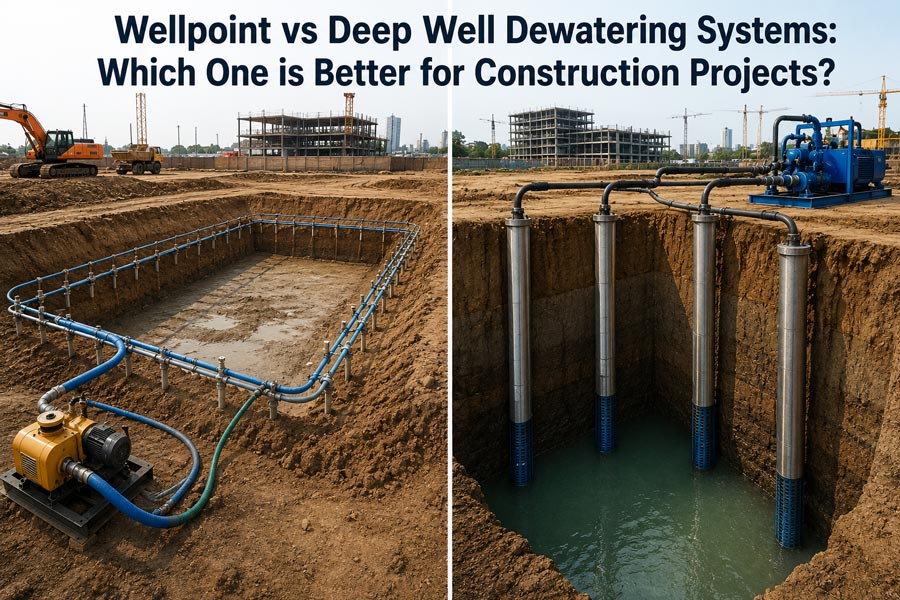
Dewatering systems in construction are the biggest hurdles to overcome in a variety of projects. A well point dewatering system may serve as an effective and versatile source of water removal when dealing with shallow groundwater or limited excavation depths. A deep well dewatering system is the appropriate system to use when dealing with deep excavations, high inflow rates, or complex hydrogeological conditions. This article will clearly outline the actual differences between these 2 forms of dewatering solutions so that you will be able to choose the correct method based upon sound engineering principles rather than by guesswork.
What Is a Wellpoint Dewatering System?
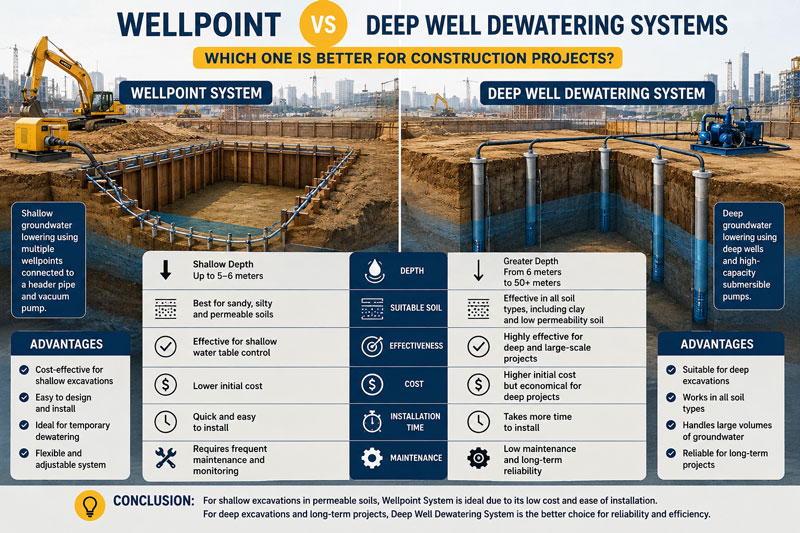
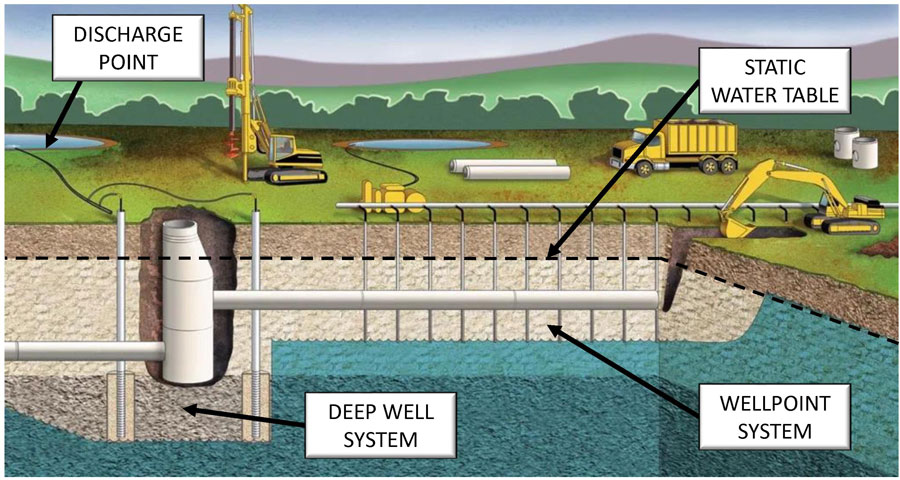
A well point dewatering system is a popular method of controlling groundwater that reduces the water table during shallow excavation projects. The system consists of numerous small diameter wellpoint wells located around the excavation perimeter or in the excavation area, typically on 10-foot spacings and joined through a common header pipe.
The pump removes groundwater continuously through the header pipe and supports the excavation walls.
The wellpoint method uses suction to produce a vacuum in the wellpoints. Well point dewatering systems are typically considered to be practical and cost-effective ways to remove groundwater in the following construction applications:
- Foundation for residential and small commercial building construction
- Utility trenches (piping, sewer, and electrical)
- Road and other infrastructure construction
- Basement excavation (moderate depths)
The efficiency of a well point dewatering system is enhanced by the presence of the following conditions:
- A previous soil type including sand or sandy gravel allows for quick drainage of the water to the wellpoints.
- A shallow groundwater table that occurs within the effective suction limit (approximately 5–6 metres below the surface) will yield positive results.
- Project depths requiring moderate drawdown will promote use of the wellpoint system versus alternatives that dewater in deeper wells.
- A site where the requirements of the Installation will be low in complexity and quick in deployment.
What Is a Deep Well Dewatering System?
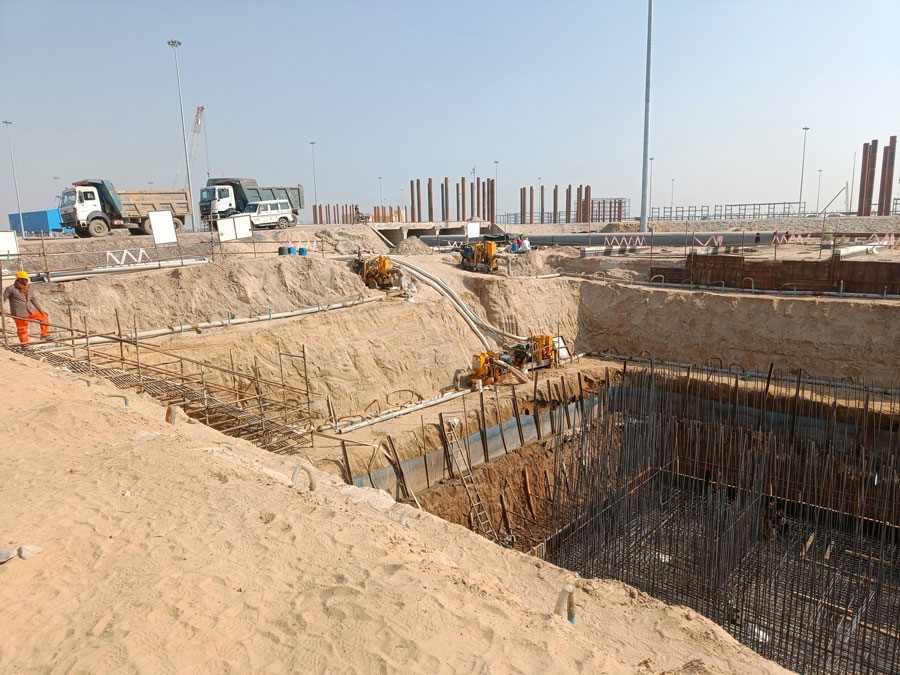
A deep well dewatering system is a high capacity groundwater control system designed for projects where substantial groundwater table reduction is required in a deep excavation environment.
A deep well system works using submersible pumps placed in large diameter boreholes drilled into the ground below the level of the excavation, allowing for direct pumping from the aquifer to achieve more significant drawdown than is possible with other methods, including wellpoint systems which utilize suction.
Dewatering systems for deep wells are popularly employed in huge excavation works where there is substantial groundwater management involved. This system is particularly intended for scenarios where deep and consistent water withdrawal is needed, especially in complicated construction sites with high inflow and deep excavations.
A deep well dewatering system has the ultimate effectiveness determined by site-specific conditions; however, it also utilizes the most effective means of dewatering under conditions including:
- Deep groundwater levels, requiring a very considerable vertical drawdown.
- Excavations exceeding the practical limits of vacuum systems.
- High-permeability soils including sand, gravel, or fractured rock which must be pumped in large quantities.
- High-capacity pumping and long-term pumping is required.
- When installation complexity can be accepted for the performance and reliability benefits of deep well dewatering systems.
Key Differences Between Wellpoint and Deep Well Systems
When comparing a wellpoint dewatering system to a deep well dewatering system, the decision should never be made on the basis of one factor; rather, the comparison should include depth of excavation, type of soil, amount of drawdown required, and total installation complexity, all of these will affect performance in the field.
The key differences between wellpoint and deep well dewatering systems should be evaluated based on engineering factors that directly impact performance in construction projects. Wellpoint systems and deep well systems can be compared based on various engineering criteria:
| Factors | Wellpoint dewatering | Deepwell dewatering |
| Depth capability | Best suited for dewatering shallow depth excavations; wellpoint systems are functional to draw down from 5 – 6 meters below discharge | Designed for at least a 10-meter deep excavation and can draw down at least 10-50+ of pumping below the average well surface level |
| Cost complexity | Less costly to install and operate and are usually recommended for short-term use, as well as can be used for small to medium projects. | Generally, deep wells are more expensive than wellpoint systems because of the cost of drilling, equipment, energy and system design. |
| Installation process | Generally a quicker and less complex process than installing deep wells, requiring less investment in labour or machinery when installed. | Installation process is generally considered to be complicated because of the deep drilling and associated casing of wells and needing to be designed to meet the engineer requirements. |
| Soil permeability | Dewatering is Performed Suitable for permeable soil such as sand and sandy gravel, the dewatering of the materials in each of these soils within a wellpoint system. | Can perform dewatering perforations in soils varying from permeable to low, including high permeable strata or deep aquifers. |
Understanding these differences helps engineers and contractors select the most efficient system based on actual site conditions rather than assumptions.
When to Use Wellpoint vs Deep Well Systems
If you are going to do shallow excavations, then you would want to use a wellpoint system; you will find that the best place to use a wellpoint system is when:
- Excavation depth is shallow (from 4 to 6 metres in depth).
- Groundwater is within 1-2 metres from ground level (shallow groundwater).
- Moderate drawdown can be achieved at that depth through staging.
A deep well dewatering system is required when any of the above operational limitations of the vacuum system exceed project conditions. Generally, if there is surface extraction with staged drawdown to control the water, then a wellpoint would typically work.
If the groundwater has to be controlled from deep down, then controlling the groundwater from deep well removal will be an appropriate choice.
Limitations of Both Dewatering Systems
Despite being heavily utilized for dewatering operations in construction projects, a well point dewatering system operates under certain constraints. Groundwater quality, soil behaviour and longer term operational requirements are each factors that detrimentally affect system performance in the field.
Recognising these limitations is crucial to providing stable, reliable performance within a dewatering system for use during excavation work. These limitations demonstrate that relying on a single dewatering method is not always effective, especially in complex construction environments.
Clogging Issue
The most common operational failure in either system is clogging of the dewatering system components. The presence of fine sediment particles in the ground water will eventually migrate into the intake areas and decrease the efficiency at which the water flows.
In a wellpoint system, the small screened openings on the well point are most vulnerable to being filled when there are fine sediments in the water to be pumped out. In deep wells, when there are fine sediments present, the water flow will be impaired as it must filter through the well screen and filter pack.
Clogging of the system components will cause the system to operate at a lower performance level and the need for operational maintenance to restore normal flow conditions.
Performance Issues While Drawing Water from Sandy Soil
While both dewatering systems can be installed in granular soils, sandy soils can provide specific challenges based on the placement and permeability of soil particles. In a uniform and very sandy soil, the groundwater flows will typically exhibit little variation from one point to another.
This is beneficial in terms of maintaining stable dewatering operations; however, should the soil particles experience migration, there may be a corresponding instability in the performance of the dewatering system.
Cost and Ongoing Maintenance Requirements
Both types of dewatering systems may require additional operational attention after start-up, as follows. The operation of a wellpoint system will typically require on-going vacuum level monitoring and exposure of serviceable piping ties for the purpose of assuring sustained performance.
The operation of a deep well system will require on-going monitoring of the submersible pumping component plus the mechanical parts that are used to build the dweller in order to assure operational function.
In both cases, the on-going support of either example of a dewatering system is directly correlated to the reliability of the complete dewatering installation. Inadequate operational monitoring will ultimately result in reduced or inefficient operations leading to frequent service interruptions.
Choosing the Right Dewatering Solution for Your Project
When choosing between a deep well dewatering system and a well point dewatering system, there isn’t a clearcut technical answer to the question. Professional groundwater control systems can usually only be selected following detailed geotechnical analysis and engineering review to ensure that the construction dewatering methods selected meets both safety criteria and construction efficiency.
In order to select the right system as dewatering solutions for your site’s specific conditions, an experienced engineer will need to evaluate your site. In many cases, choosing the right dewatering solutions requires a detailed engineering assessment rather than relying on a single method.
For complex construction environments, working with experienced dewatering contractors and using engineered dewatering solutions in UAE can significantly improve performance, reduce risk, and ensure long-term project stability.
In real construction scenarios, a combination of systems or advanced dewatering solutions is often required to achieve reliable groundwater control.
Final Advice for Selecting Your Dewatering System
It is ultimately an engineering decision on whether to select a well point or deep well dewatering system using actual site data rather than a general preference or assumptions. Every excavation project has varying depths of excavations, groundwater behaviors, and soils throughout the excavation; these items will ultimately determine how successful a dewatering system will perform.
There are no one-size-fits-all-type solutions in the construction industry. What may be a highly efficient method for one project may be a poor solution on another project where subsurface conditions differ.
If you are looking to complete the project execution with on-site field installation, you can work with existing dewatering contractors experienced in proper installation and performance of these systems.
FAQs Concerning Well Point and Deep Well Dewatering Systems
What is a wellpoint dewatering system?
A wellpoint dewatering system is a method used to control groundwater, typically during shallow excavation work. The system is made up of many small contained well points with an installed vacuum pump system that creates controlled hydrostatic pressure on the groundwater table.
What is a deep well dewatering system?
A deep-well dewatering system is designed to remove large amounts of groundwater, typically in very deep excavations.
Which system is better for construction projects?
There is no single better dewatering system for construction projects. The choice of dewatering system will depend on site-specific conditions.
What is the difference between wellpoint and deep well?
A well point dewatering setup is designed for shallow digs with not much drawdown. A deep well dewatering setup will have a high discharge rate and provide long term control over groundwater in deep digs.
What works best for deep excavations?
In general, the only reliable dewatering system for deep excavation will be a deep well dewatering system which can handle the greater quantity of groundwater inflow and provide the necessary amount of drawdown.
Which system is lower in cost?
The cost of a wellpoint dewatering system will be more than a deep well dewatering system when applied to small and mid-sized shallow projects, however, the cost of installing and operating a deep well dewatering system will typically be more expensive than a wellpoint system.
What role do soil conditions have in selecting the appropriate dewatering system?
Soil conditions are critical in determining dewatering options because they provide an essential influence over water flow, pumping efficiency and drawdown performance.